 NVDL
A stop loss or take-profit instruction can help implement an NVDL exit plan, but neither guarantees a chosen outcome. Stops, stop-limits, sell limits and linked orders make different trade-offs between price conditions and execution. Choose the mechanism only after understanding triggers, sessions, quantities and what happens when the market gaps or an order partially fills.
Begin with the condition you want the order to implement
A loss threshold, a price objective and a change in the investment thesis are different conditions. Some can be represented by an order; others require judgment. A chart alert can prompt a review, but it does not automatically interpret company news or complete an exit.
Define which instrument’s price matters. An NVDA level is not automatically an equivalent NVDL level over your holding period. Daily compounding, entry time and market-price differences prevent a universal conversion. If the order is on NVDL shares, confirm that its trigger or limit refers to the instrument you intended.
Write the planned remaining quantity as well as the price condition. A take-profit order for part of a holding creates a different operational task from a complete exit. The stop quantity must be reconciled with any executions rather than left unchanged by assumption.
A stop order sacrifices price certainty after activation
As described in the SEC’s order-type bulletin, a conventional stop becomes a market order after its trigger condition is met. The execution can be materially different from the stop price. The trigger is an instruction condition, not a reservation of available buyers at that level.
A fast decline or an opening gap can therefore produce a larger realized loss than the planned distance suggests. A short-lived price move can also activate an order before a reversal. These are relevant limitations when deciding whether the structure fits the purpose.
Check the broker’s trigger basis and eligible session. Different services can use specific trade or quotation conditions. Do not assume that a price visible on an extended-hours chart necessarily activates the order under the rules actually accepted in the account.
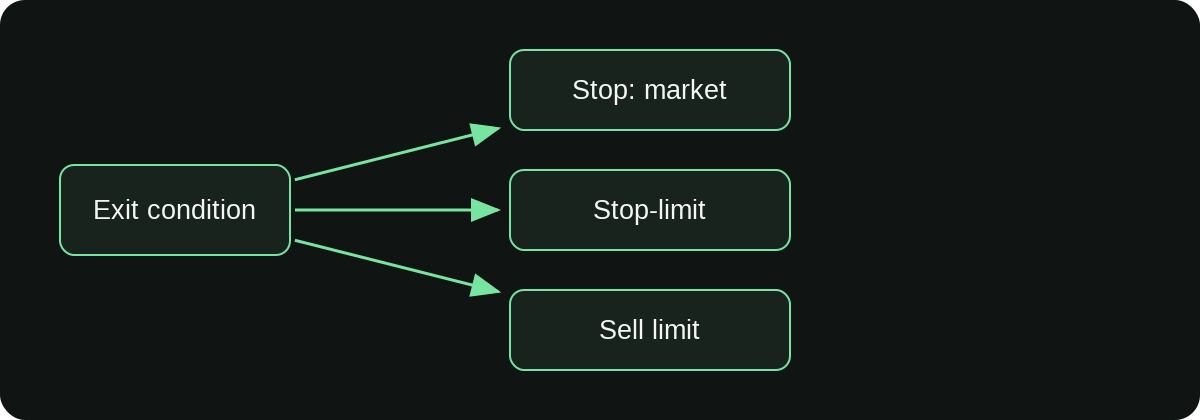
A stop-limit adds a price condition and can remain unfilled
A stop-limit uses a trigger to activate a limit instruction. For a long-position exit, the resulting sale is constrained by its limit. If the market moves beyond the acceptable range without sufficient buyers, the order can leave the shares unsold.
This can be appropriate for someone who prioritizes a price condition, but it is not a way to combine guaranteed execution with guaranteed price. A narrow gap between trigger and limit can make the non-execution question especially important during a sharp move.
Specify the next step if the activated order remains working. That step should be understood before the event, without assuming a later manual intervention will always be possible. A plan that depends on continuous connectivity should acknowledge that dependency explicitly.
A take-profit limit does not establish a future gain
A sell limit expresses the minimum acceptable price for that instruction; it does not force the market to reach the price. Even a chart showing a touch at the level does not prove your quantity executed. Available size, timing and the order’s status still matter.
A partial execution can produce a realized gain on some shares while leaving the rest exposed. Reconcile the remaining position and any linked orders. A single notification saying an order executed can conceal whether it was fully or partially filled.
The SEC overview of order types supplies the basic distinction. Your broker’s detailed terms determine supported features, price increments and duration choices. A generic educational description should not be turned into instructions for a button or menu that has not been checked.
Linked orders need an actual broker relationship
Some brokers support bracket or order-cancels-order arrangements that coordinate exit instructions. Two independent orders do not automatically become linked. Verify when each leg becomes active, how partial fills are handled and what quantity remains after an event.
If the relationship is unclear, submitting overlapping sell instructions can create a conflict. Depending on the account and broker, an excess instruction may be rejected or introduce an unintended position. The risk is operational, separate from whether the original market view was right.
The position-closing workflow explains the final reconciliation. A linked-order feature can help manage the process, but the account still needs checking after execution. Do not treat a feature name as evidence that all residual instructions have disappeared.
Size the idea without calling the stop a maximum-loss guarantee
A planned stop distance can be used in a scenario calculation: quantity multiplied by the assumed price difference estimates the loss if that exit price is achieved. Add the relevant costs and label the execution assumption. The result is a scenario, not a guaranteed loss ceiling.
A larger gap, poor execution or a halt can invalidate the assumption. Buying fewer shares reduces the dollars exposed but does not prevent those events. Financing the position introduces additional account terms beyond the fund’s own leverage and the order’s trigger.
The useful planning question is what happens if the assumed exit does not occur. The NVDL risk map helps separate controls from promises. No particular percentage stop is universally appropriate for every account, strategy or market condition.
A pre-submission order audit
| Field | Check before activation |
|---|---|
| Instrument and side | NVDL shares, correct exit direction |
| Quantity | Consistent with the position and other live instructions |
| Trigger | Correct price basis and session rules |
| Limit, if any | Understood non-execution possibility |
| Duration | Expiration and extended-hours treatment confirmed |
| Linkage | Actual broker-supported relationship, not an assumption |
Save the accepted order details and confirm subsequent changes. If the position is reduced elsewhere, revisit the instructions. The audit is useful because failures often arise from a mismatch between the intended plan and the actual order rather than a missing indicator on the chart.
Frequently asked questions
Does a trailing stop always protect more profit?
No. Its moving trigger changes the instruction, but volatility can activate it before a later recovery. Check the reference and adjustment method. A trailing feature does not guarantee a favorable sale price or superior outcome.
Can a dividend or share split affect an existing order?
Broker adjustment rules can matter around corporate actions. Read the event notice and the order terms, then verify the instruction actually remaining. Do not assume the broker leaves every order unchanged or adjusts all types identically.
Does placing exits mean I can ignore the position?
No. Orders can expire, be rejected or remain unfilled under their conditions. They also cannot interpret every change in circumstances. The fund’s active-management implications and the account’s live instruction status remain relevant.