 NVDL
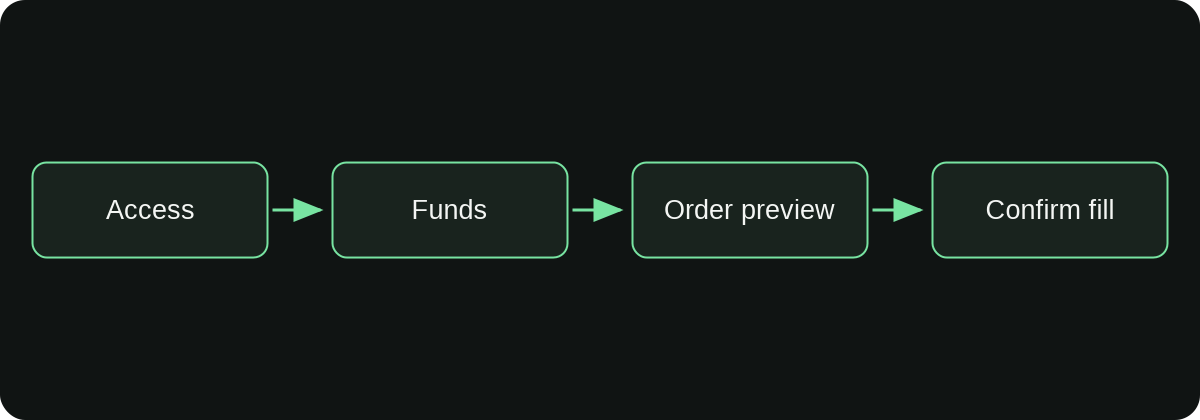
To buy NVDL, use an eligible brokerage account, confirm the exact ETF, check product permissions and available funds, then submit an order whose price and duration you understand. Complete the process by verifying the fill and remaining orders. This is a general workflow, not a claim that every US broker or account currently permits the purchase.
1. Confirm account eligibility before moving money
Check the broker’s official terms for your residence, account type and access to leveraged exchange-traded products. Some firms apply knowledge checks, agreements or restrictions. An available quotation does not prove the account can execute a purchase, and another customer’s access does not establish your own.
For example, Fidelity’s ETF screening terms describe additional requirements for certain leveraged and inverse products. That is an example of broker-specific policy, not a universal rule to reproduce across all firms. Confirm the current requirements directly with the firm you actually use.
Do not change factual answers on an application to bypass a restriction. A rejected order should lead to an explanation of the rule or a reconsideration of the instrument. Access controls are not a trading obstacle to solve by misrepresenting residence, experience or investment objectives.
2. Establish funds and account consequences
Distinguish cash available to trade, settled cash and a displayed buying-power figure. The last may reflect borrowing or account-specific calculations. Before entering an order, understand whether the purchase is fully cash-funded and which cash-account or margin terms apply.
The SEC’s settlement bulletin explains the T+1 framework for most covered US securities transactions. Trading permission, settlement and withdrawal availability are related but different fields. A holiday or a pending deposit can affect the practical timetable.
Ask the broker about any restriction you do not understand before buying. Do not assume the sale of another position immediately creates unrestricted settled funds for every subsequent action. The account’s funding and trading history matter to its operation.
3. Find the ETF and read the orderable instrument
Search NVDL and verify GraniteShares 2x Long NVDA Daily ETF. Confirm that the result is ETF shares rather than an option chain, a CFD or another contract carrying a similar name. Read the instrument details in the account rather than relying only on a search-engine label.
Open the current prospectus and fund notices from official sources. The issuer’s fund page provides document links, but dates still need checking. A historical supplement or factsheet does not necessarily replace the newest expense and strategy disclosure.
Then state the planned holding horizon. If the intended task has changed since the research, revisit it before opening the ticket. Having funded an account does not create a reason to complete a trade that no longer fits the original purpose.
4. Read the quote and choose the session
Check bid, ask, sizes, last-trade time and session. A delayed number may be useful for research but not sufficient to establish what your quantity can obtain now. The quote guide explains why a missing current value should not be replaced with an unlabeled old price.
Confirm the relevant market hours and whether the broker supports the selected session for this instrument. Extended-hours rules, order choices and available liquidity can differ. Do not assume an order valid in the regular session will behave identically in another session.
The day this guide was checked, November 26, 2026, was a scheduled US equity holiday. A broker might accept an instruction for later handling without executing it immediately. Submission time and execution time must remain separate in the transaction record.
5. Build the order around an explicit price trade-off
Select the share quantity or supported order amount, then read the calculated commitment. If fractional shares are offered, check their specific order and execution terms. A dollar-denominated ticket does not remove the need to know how the broker determines the final quantity and price.
The SEC overview of order types distinguishes market and limit instructions. A market order prioritizes execution rather than a particular price; a limit imposes a price condition that can leave the order unfilled. Neither choice should be described as universally best for every moment.
Set the duration and session deliberately. Review the ticker, side, quantity, price condition, funding account and estimated charges in the final preview. If one field is unclear, pause before submission instead of using a small amount to test an instruction you do not understand.
6. Verify what happened after submission
Read the order status. An accepted or working order can remain unfilled, and a partial execution leaves a residual instruction. Before submitting another order, determine whether the first one can still execute. A duplicate request can create more exposure than intended.
Once filled, save the confirmation with quantity, price, time and fees. Reconcile the position with the intended order. The last price on the research page is not the proof of your cost; the execution record is the relevant starting point for your personal return calculation.
If the order is rejected, retain the message and ask the broker what it means. An unavailable product, insufficient funds, invalid price increment or session rule can require different responses. Repeatedly resubmitting without diagnosing the reason is not a troubleshooting method.
Prepare the management task before ending the workflow
Record the position’s review horizon, the source of the underlying investment view and any existing exit instructions. An automated exit is subject to its own rules and limitations. It does not substitute for knowing how the daily objective relates to the period you intend to hold.
The purchase workflow ends with an understood position, not merely a successful confirmation screen. Keep access to the broker’s support channels and document any changed conditions. If the required monitoring cannot be maintained, that is a new suitability question rather than an administrative detail.
Frequently asked questions
Do I need personal margin approval just because NVDL is leveraged?
Do not infer a universal account requirement from the fund’s internal leverage. Check the broker’s product policy and whether you are actually borrowing. Internal fund exposure and a customer margin loan are separate arrangements.
Can an order remain open after a partial fill?
Yes, depending on its terms and status. Check the remaining quantity and whether it can still execute before adding or replacing an instruction. Use the broker’s confirmed cancellation status rather than assuming a request has already taken effect.
Does a broker logo on the issuer’s page confirm my access?
No. It may indicate a route to investigate, but your account’s residence, permissions and current product availability still need confirmation. The issuer does not control every broker’s admission and order-handling policy.